Saturday, 13 April 2013

Action Poetry (Part 2/2)

In a previous post you were introduced to the basics of writing performance poetry and saw some good examples of this artform. Today we will go further into details of getting into this field and further succeeding!

So you have a passion for the art or you're a poet who written lots, how do you get better and more well known?  The answer to this question is style, substance and support.  These three have the potential to take you from relative unknown to having a fan club started in your honour.


Photo courtesy of HubPages.com
Style

This refers to how you write.  The arrangement of your lines.  In performance, the art of poetry must be modified for the EAR because the audience is NOT meant to SEE the script.  This gives some about of latitude for the use of assonance and other phonetic literary tools.  The aim is to have your audience be able to follow the story you are telling so don't be too technical.
NB: Be sure to practice your delivery before performance.  It would be ideal for you to memorize your poem so that you could use your whole body and eyes to convey the message to your audience.


Photo courtesy of Inbound Sales Network
Substance

In order to grab the attention of the masses you must talk about something that will resonate with a large cross-section of people or even a niche market.  It is important to know who you are performing to so you can choose appropriate poems and deliveries.  Also, current topics and topics about which you are passionate will likely reflect in favour of your performance.  While you do not want to be too technical and lose your audience, it is important that your content be something that won't easily be forgotten.


Support
Photo courtesy of Apperson

Get out and perform.  How will your work be known if you keep it to yourself?  Find a Open Mic club in your area, or make time to go the distance to those far away maybe once a month, or make YouTube videos of yourself performing.  Do all that you can to put yourself and your work out there.  It is likely your art will benefit from your exposure to others in the field and you will find inspiration.  Another thing you will find are poets to collaborate with.  Find good poets who could compliment your style and substance then make connections; write and perform poems together.

All the great performance poets have these three things in common.  Along with writing ability and passion for the artform; they know they are writing for an audience to hear, they produce memorable content and they all put themselves in the spotlight.


Hopefully you will put these tips to good use 
May the snaps and cheers come ringing through 
At the end of each poem that you perform
So fame will pour down, on you like a storm. 

... withShantelleS

Friday, 11 January 2013

Action Poetry


In the most recent posts, I took a turn at writing poems.  They didn't all rhyme and they weren't all readily understandable.  But! after reading them a dozen times maybe with a dictionary/ thesaurus you figure them out or at the very least get the gist of the message.  They were all in fulfilment of a class assignment but they were also due to a recent surge in interest I have had in this genre of writing and speech delivery.  Today's post will be on Performance Poetry.

Photo of Sarah Kay, Spoken Word Poet
TED Conference (Voted 2011 Best TED Presentation)

Poetry is ...
                  /ˈpəʊɪtri/ literary work in which the expression of feelings and ideas is given intensity by the use of distinctive style and rhythm; a genre of literature.
This is our working definition.  Many things to many people; anyone can conjure up their own definition for poetry but here we will stick to Oxford's.


Performance Poetry is written not for print or reading but to be seen and heard.  The art form has many names: Spoken Word, Stand Up, Dub, Slam; to-may-to/to-mah-to. I will first introduce you to the work of Taylor Mali to open your mind to the wonder of poetry.  This video, "What Teachers Make", is an interpretation of Taylor Mali's poem performed by actors.  Therefore this is a merger between poetry and acting.


A teacher by profession and Page Meets Stage Curator, Taylor has dealt with the situations he describes in this poem.  These are his opinions, this is his burden that he has put to writ and transferred to stage.  In a previous post I tackled the topic of what to write.  While I won't tell anyone what to write I mentioned some of the features of what is considered 'good' literature.  Passion, Plot development, Literary value.  Tell the story that you care about, keep your reader/listener on the edge of the seat and fearlessly use the literary tools that you have.

The next poem is "The Truth Without Photoshop" by P4CM poet Janette...ikz needs no introduction but be warned it will likely draw on your emotions.


The words spoken by Janette...ikz here is truth.  This is her story unapologetically, creatively, hers.  This video shows performance poetry in the manner that it is most often seen; done by the original author, to an audience and without props.

These pieces differ in content and presentation yet are common in that they are poetry in action.  Follow up on these artists and enjoy the world of performance poetry.

...withShantelleS

Thursday, 12 July 2012

Task 3/3

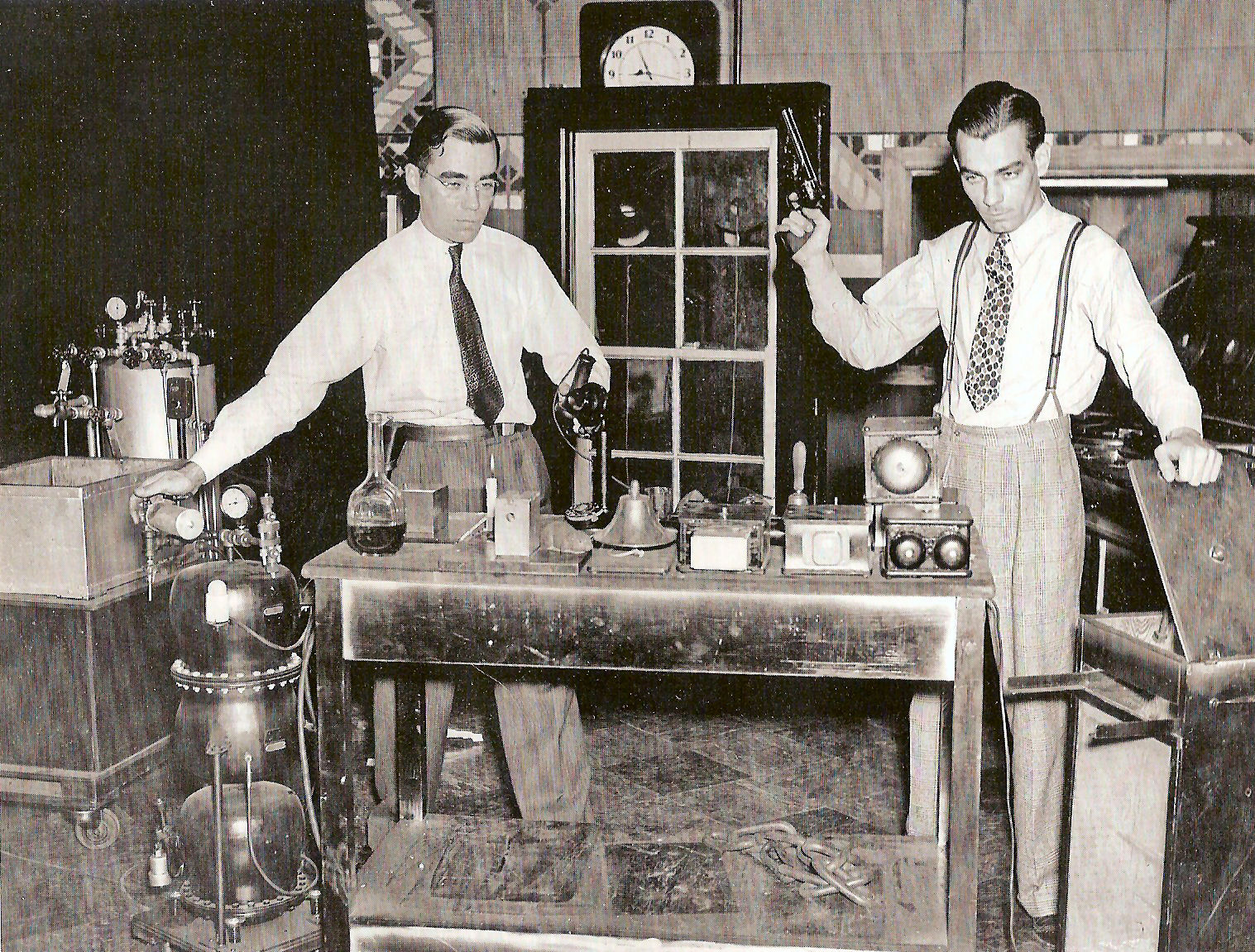
Photo of WLW's Sound Effects Department
Radio drama script writing Kissing Cousins

Well folks I took a break
I simply had to recuperate.
Now off we go to the biggest task;
The radio drama to come unmasked.
We write footsteps and door openings
cooking meals and restful sleep.
Aye writing these not to be seen,
there are only for those listening.
Drama for ears
with action not seen but solely heard.
Strike a mood with tone and pitch,
volume and the slightest lisp.
Draw the tension with a well placed
"dum dum dummm!"
sound effects became my best friend.
And "excessive" action my greatest foe
really!
How does one write a bored shrug for the ear?
How does one write a small smile with flair?
Writing a pornography-induced orgasm
without the use of a Narrator's care?
Yet
The challenge was met
the job is done.
Finally I can say the task is NONE.

...withShantelleS

Sunday, 24 June 2012

Task 2/3

Photo by LiveByTheSun
Double Column script writing Kissing Cousins
I'll tell you what concerns me
I'll tell it to you quick
Headings, titles, common terms
the syntax of the script!
Under exam conditions
I cannot ask for help
disadvantaged due to shoddy software
in class my presence went unfelt.
Imagine being in cage
pushing at your bounds
trying to communicate and make your thoughts be known.
Now imagine that you're not at all
in a position to
the picture now is shown.
Each line a frame
you call the shots
you compose, you tell the story
through the camera lens.
Yes
Frame by frame was hard
but I had a template--
FOLLOW is a word I hope never to see again.
With diligence and patience
this I did get through.
Sadly friends, we are now
only at part 2.

Task 1/3

Screenwriting Kissing Cousins
It's just shy the hour of eight
my final assignment I see
I feel its time for me to watch
so I can begin writing.
A simple task it seems to me
it can be fin in no time.
The title risqué, the samples possible
little did I know I'd die inside.
A watch in awe the story unfold
from beginning to end.
Then I sit to undertake
the writing without pen.
At once up straight, at twice reclined, trice I am on my back.
I turn over and close my eyes, drifting through the night.
That is until the clock struck 1 and sleep I could no more.
"Rise," the task said to me "and tackle now for sure".
So up I sit to undertake the simple task ahead.
I listen and I transcribe words
rough draft is at an end.
Good now I start to write the film
to interest and grab
I catch myself I'm struggling
the words cannot be had.
Push on because after-all this is the easy part
just wait until you've shots to take
or words for ears and hearts.
The task is through
I've overcome
But
only this part is done.

Saturday, 23 June 2012

Mass Media Writing Formats

I just spent a gruelling weekend writing a Screenplay, Double Column Script for Television and a Audio Script for Radio.  All I had to work with was a movie and limitations.  As I learned so will you.


The featured video today is Kissing Cousins. 
A "relatively" romantic comedy about a professional heartbreaker (and cynical bachelor) who teams up with his attractive cousin from the UK in order to fool his friends into believing he is capable of a relationship.


I adapted scenes two and three of this movie into the three formats mentioned using:

  1. Celtx; a free, media pre-production software 
  2. Screen-writing guidelines explaining how the different elements of a Screenplay are used
  3.  Double Column scriptwriting guidelines with Camera shots angles and movements.
  4. Audioplay (for radio) scriptwriting guidelines with writing for the ear pointers.

Essentially, I blindly walked into the project like the first day I went driving a Manual Transmission vehicle after only reading about the principles (true story--bad outcome).  It is fantastic to have the theory but hands-on, practical work is where you find out how much you have really learned.  I encourage everyone who wants to write for media to not just read about but do it!

Just a break down of how I went about adapting the two scenes to the different script formats:

* Adapting across media from audio/visual to audio is really difficult and takes diligence to remain true to the story being conveyed.  It spent 4 hours doing just this.
* Shot composition takes time due to changing shots for almost every sentence of dialogue.  People move a lot and the audience is always curious to to see general set layout as well as facial nuances.  Her went another 4 hours.
* Putting into words all that is seen and heard takes care and attention to detail.  I spent 2 hours just transcribing the scenes.


That makes a combined total of approximately 10 hours spent on 2 minutes worth of footage.


Here is the movie Kissing Cousins.  I scripted the scenes from Amir walking down the hallways in his apartment building until he woke in bed the next morning (3:21--5:21). 


...withShantelleS

Internet In Moderation

Today we'll discuss some of the pitfalls of Social Media.  In the previous post there I encouraged the use of the Internet and all its resources for getting your business and products out there.  In this post I guard against getting so wrapped up in the Inter-webs that you begin to forget and overlook people.


Our featured video is "I Just Texted to Say I Love You" by Elliott Yamin.  The title really does say it all!


When people begin to fully exploit the Internet and join the social communities online our "tech obsessed culture does everything possible to avoid face-to-face interaction". 


If you are a disciplined, organized person you will ensure that time spent on the internet is balanced with time spent being active and making human contact.  If you are like me then here are some proven pointers to 


Help You Moderate the Time Spent Online:

  • Be honest; look at how your time is spent and evaluate whether you need to limit your Internet usage
  • Prioritize your time; set reasonable limit on how much time you want to spend online
  • Write lists; know what needs to be done online and do them before you get distracted
  • Stick to your time limits!

The fact is that you are going to have to make the changes yourself and no one can control your time for you.  A very good software that can help you keep track of your time spent online is RescueTime.  Spot inefficiencies in your day and become better at self managing by signing up for free to take ensure everything you do is in moderation. 

...withShantelleS